Water does not need a dramatic storm to damage a house; it only needs a bad path. The best downspout extension ideas solve that quiet problem before puddles press against a basement wall, wash mulch into the lawn, or leave a slick strip beside the driveway. Most U.S. homeowners notice the issue after the damage starts, which is the painful part. A $25 extension can sometimes prevent a repair that costs hundreds or thousands later.
Good drainage also protects curb appeal. The goal is not to throw ugly plastic tubes across the yard and hope nobody notices. It is to move roof runoff away from the foundation in a way that fits the home, the soil, and the way your family uses the space. That is why smart home maintenance planning treats gutters as part of the whole property, not as a forgotten strip of metal at the roofline. Once the downspout lands in the right place, the yard starts behaving better.
Start With the Water Path Before Choosing the Extension
A downspout extension is only as good as the path it creates. Many homeowners buy the first flexible tube they see at a hardware store, snap it on, and call the job finished. That works in a few cases, but it fails when the yard slopes back toward the house, the soil holds water, or the outlet sends runoff across a walkway.
Watch Where Water Already Wants to Go
Water has a habit of telling the truth. After a rain, walk around the house and look for dark soil, flattened mulch, green algae on concrete, or small channels cut into the lawn. Those marks show where runoff is already moving, and they matter more than the clean drawing you may have in your head.
A simple test helps, too. Run a hose into the gutter or downspout for a few minutes and watch where the water exits. If it pools near the foundation, the extension needs more distance. If it crosses a sidewalk, it needs a safer outlet. If it dumps into a low garden bed, the bed may look healthy while the soil behind it stays overloaded.
The counterintuitive part is that a longer extension is not always better. A ten-foot run that ends in a low spot can create a soggy patch farther from the house, then send water back underground toward the same foundation. Distance matters, but direction matters more.
Match the Extension to Soil and Slope
Clay-heavy yards in parts of Texas, Georgia, Ohio, and the Midwest hold runoff longer than sandy soil in Florida or coastal areas. That means the same extension can work well on one property and fail badly on another. Soil changes the speed of drainage, and ignoring that fact makes the entire project feel random.
A sloped yard gives you help, but only if you aim with care. Send water downhill toward a lawn area, drainage swale, gravel bed, or safe street-side outlet when local rules allow it. Never aim the flow toward a neighbor’s property, a driveway that freezes in winter, or a basement stairwell that already collects moisture.
Flat lots need more patience. A pop-up emitter, gravel discharge zone, or buried downspout drain may make more sense when surface extensions keep getting kicked, crushed, or moved during mowing. The right choice is the one that keeps working after the first week of enthusiasm wears off.
Downspout Extension Ideas for Visible Areas Around the House
The front of the house creates a different challenge. You need water control, but you also need the entry, porch, driveway, and planting beds to look intentional. This is where downspout extension ideas should feel like part of the landscape rather than a repair someone forgot to hide.
Use Decorative Splash Blocks Where Flow Is Light
A downspout splash block works well when the roof area above the downspout is small and the ground already slopes away from the foundation. It slows the falling water, spreads the impact, and keeps soil from splashing against siding. Concrete, stone-look resin, and metal designs can all work, but weight matters in windy or high-flow spots.
The mistake is treating a splash block like a full drainage system. If water is pouring from a large roof valley, the block may reduce erosion without moving runoff far enough away. That leaves the foundation damp while the surface looks tidy. Pretty can be useful, but it cannot replace distance.
A good placement leaves the block slightly tilted away from the house. The outlet should not sit flat or point sideways into a bed border. In snowy states, check it after freeze-thaw cycles because frost can shift lightweight blocks and aim water back toward the wall.
Choose Roll-Out or Flip-Up Extensions Near Walkways
Walkways and driveways need drainage that does not create a daily obstacle. A flip-up extension can move water during rain, then lift out of the way for mowing or foot traffic. Roll-out styles open when water flows, then retract when dry. Neither is perfect, but both solve the problem of a rigid tube sitting where people walk.
A roll-out extension makes sense near a side yard path or narrow strip between houses. It keeps the dry-day profile low, which matters when trash bins, bikes, or lawn equipment pass through the area. The weak point is debris. Leaves and granules can clog the tube, so you need to check it after heavy fall rains.
Flip-up models feel more durable in busy areas. They also let you clean the outlet without fighting a long flexible hose. For a typical American driveway corner, a hinged extension often looks cleaner than corrugated pipe snaking across the concrete. Small details like that keep the house from looking patched together.
Hidden Drainage Options for Larger Runoff Problems
Surface solutions are easy to install, but some homes need a cleaner and stronger plan. When runoff keeps returning, extensions get crushed, or the lawn stays wet days after a storm, hidden drainage can protect the property without adding visual clutter. This is where the project moves from accessory to system.
Install a Buried Downspout Drain With a Safe Outlet
A buried downspout drain moves roof water underground through solid pipe and releases it at a safe discharge point. This option suits homes with finished landscaping, narrow side yards, or downspouts that empty near patios. It costs more than a surface extension, but it also avoids the weekly annoyance of moving hoses before mowing.
Solid pipe usually beats perforated pipe for this job because the goal is transport, not soaking water into the soil beside the house. The pipe should slope away from the foundation and avoid tree roots where possible. Cleanouts help, especially under large roof areas that shed leaves and shingle grit.
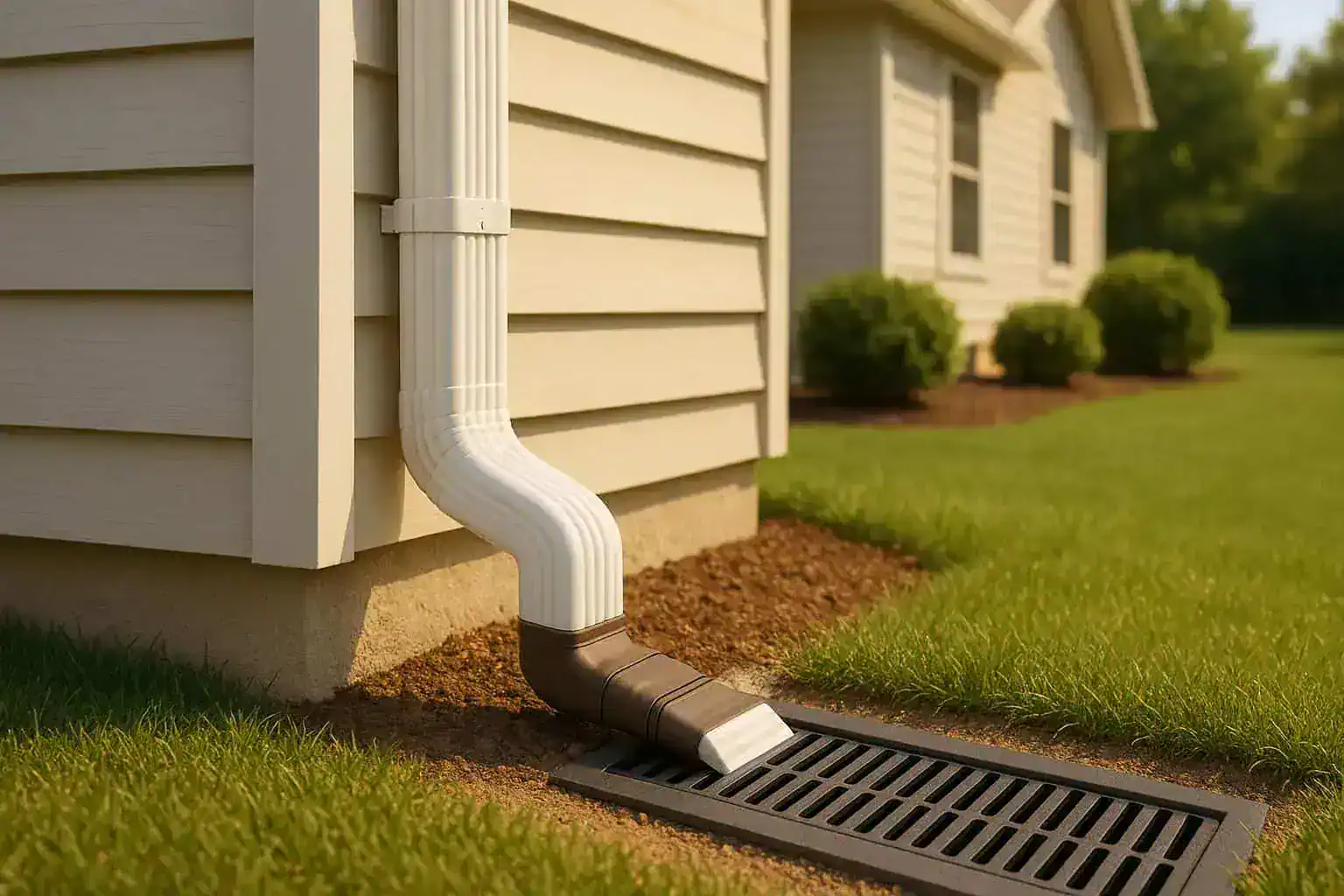
Here is the trap: buried does not mean forgotten. If the outlet clogs, water can back up and spill near the foundation again. A grated end, pop-up emitter, or visible discharge point makes maintenance easier. Homeowners often want invisible drainage, but the best systems leave you at least one place to inspect.
Use Pop-Up Emitters When the Lawn Needs a Clean Finish
A pop-up emitter opens under water pressure and releases runoff into the yard, then closes when the flow stops. It works well where a pipe must cross under mulch or lawn but the outlet should stay low and neat. Suburban homes with front lawns often use this approach because it keeps the drainage line out of sight.
Placement decides whether it succeeds. The emitter needs a lower area where water can spread without drifting back to the house. It also needs enough daylight around it so grass, mulch, or soil does not cover the lid. If the outlet disappears under overgrowth, the system loses its escape point.
Cold climates add another layer. Ice can block outlets, and frozen soil may slow absorption. In places like Minnesota, Michigan, or upstate New York, the emitter should be checked before winter and again during early spring thaw. Drainage that works in July can struggle in March.
Landscape-Based Gutter Drainage Solutions That Look Natural
Some of the best drainage choices do not look like products at all. They look like thoughtful yard design. Gutter drainage solutions can blend into beds, stone borders, and lawn grading when the runoff volume and soil conditions support that approach.
Build a Gravel Runoff Bed That Handles Repeated Flow
A gravel bed can receive water from a downspout and spread it through a controlled area without turning soil into mud. River rock, crushed stone, or decorative gravel can work, but the bed needs depth and a clean edge. A thin layer of pretty stones over soil will not solve much.
The bed should extend away from the house, not sit like a bowl beside it. Landscape fabric may reduce weed growth, but it can also collect sediment over time. That means the surface should be easy to rake, clean, or refresh. Drainage design lives in the future, not the day it looks nice for photos.
A strong example is a side-yard stone channel running from a rear downspout toward a lower lawn area. It can look like a dry creek bed while quietly carrying stormwater away during heavy rain. That is the sweet spot: useful when wet, attractive when dry.
Direct Water Into Rain Gardens With Care
A rain garden can collect and absorb roof runoff while adding plants that tolerate wet and dry swings. Native sedges, switchgrass, black-eyed Susan, swamp milkweed, and similar region-friendly plants often work better than thirsty ornamentals. The design should fit your local climate, not a generic plant list from another state.
The garden should sit away from the foundation, septic areas, and underground utilities. It should also receive water gently. A downspout that blasts into loose soil can carve a trench before plants have any chance to help. A stone apron at the inlet slows the flow and protects the planting area.
Rain gardens sound soft, but they demand discipline. If your yard has poor drainage, high groundwater, or standing water that lingers for days, you may need professional advice before sending more roof runoff into that spot. Plants can manage water; they cannot fix a bad basin on their own.
Protect the Foundation, Walkways, and Everyday Use
Water management is not only about storms. It affects basement odors, icy sidewalks, mosquito pockets, shifting soil, and how often you avoid certain parts of your own yard. Foundation water protection starts with roof runoff because gutters collect so much water in such a concentrated way.
Keep Discharge Away From Basement Trouble Zones
Basement walls, window wells, crawl space vents, and lower-level doors deserve extra caution. A downspout that empties near any of these areas is asking the weakest part of the house to handle the strongest water flow. That is bad math, even when the soil looks dry on top.
A common American problem shows up around older homes with settled soil. The yard may have dropped near the foundation over the years, creating a shallow trench that catches water. A surface extension can help, but grading may still need correction. Drainage cannot fight gravity forever.
Foundation water protection also means watching where extensions end. If water dumps beside a concrete slab, it can erode the base below the edge. If it exits near steps, the area can become slick or icy. The safe outlet is not the first open space you see; it is the place where water can leave without starting a second problem.
Plan for Mowing, Kids, Pets, and Daily Traffic
The best drainage setup fails when it annoys the people who live with it. A long plastic extension across the lawn may work until someone removes it before mowing and forgets to put it back. A pipe across a play area may move water well but turn into a trip hazard. Real life edits bad designs fast.
Choose rigid extensions for low-traffic edges, flexible ones for awkward bends, and hinged styles where access matters. In a backyard with dogs, exposed corrugated tubes can get chewed, dragged, or crushed. Near kids’ play zones, a buried line or stone channel may be calmer and safer.
Small maintenance habits finish the job. Clear leaves from elbows, check outlets after storms, and look for erosion where the water exits. None of this is glamorous. That is why it works. The quiet systems are the ones that protect a house season after season.
Conclusion
Roof runoff becomes easier to control when you stop thinking about the downspout as the end of the gutter. It is only the handoff point. From there, the water still needs a route that respects slope, soil, landscaping, foot traffic, and the weak spots around the house.
The smartest downspout extension ideas are not always the most expensive ones. A splash block can be enough on a small roof section with good grading. A buried pipe may be worth every dollar near a finished basement. A gravel bed can solve a muddy side yard without making the home look overbuilt. The right answer depends on where the water goes after the first ten seconds of rain.
Walk your property during the next storm and watch the flow with honest eyes. Mark the trouble spots, choose the extension that fits each area, and fix the path before the house starts sending louder warnings.
Frequently Asked Questions
How far should a gutter downspout extension go from the house?
Most homes benefit from moving water at least several feet away from the foundation, but slope matters more than distance alone. The outlet should end where water keeps moving away from the house instead of pooling or drifting back underground.
Are flexible downspout extensions better than rigid extensions?
Flexible extensions work well around bends, landscaping, and tight corners. Rigid extensions usually look cleaner and hold shape better in open areas. The better choice depends on traffic, mowing needs, outlet direction, and how much water the downspout carries.
Can a downspout drain into a flower bed safely?
A flower bed can receive light runoff if it slopes away from the house and drains well. Heavy roof flow can flood roots, wash mulch, and keep soil wet against the foundation. Use stone, grading, or a longer outlet when the bed sits close to siding.
What is the best downspout extension for a front yard?
A hinged extension, decorative splash block, buried pipe, or pop-up emitter often works best in front yards. The goal is to control water without making the entry look messy. Choose the option that matches runoff volume and the home’s curb appeal.
Do buried downspout drains clog easily?
They can clog when leaves, roof grit, or soil enter the line. Cleanouts, gutter guards, solid pipe, and a visible outlet reduce that risk. Check the system after major storms and during fall cleanup so water does not back up near the foundation.
Should downspouts drain onto the driveway?
Drainage onto a driveway can create stains, erosion along slab edges, and icy patches in winter. It may be acceptable in mild areas with proper slope, but it is often safer to send water toward lawn, gravel, or an approved drainage outlet.
Can downspout extensions help prevent basement leaks?
They can reduce one major source of basement moisture by moving roof runoff away from the foundation. They will not fix cracked walls, failed footing drains, or poor grading alone, but they are one of the first repairs worth making.
How do I hide ugly downspout extensions?
Use buried pipe, pop-up emitters, stone runoff beds, painted rigid extensions, or plantings that frame the drainage path without blocking it. Avoid hiding the outlet so well that you cannot inspect it after storms. Clean access matters as much as appearance.