
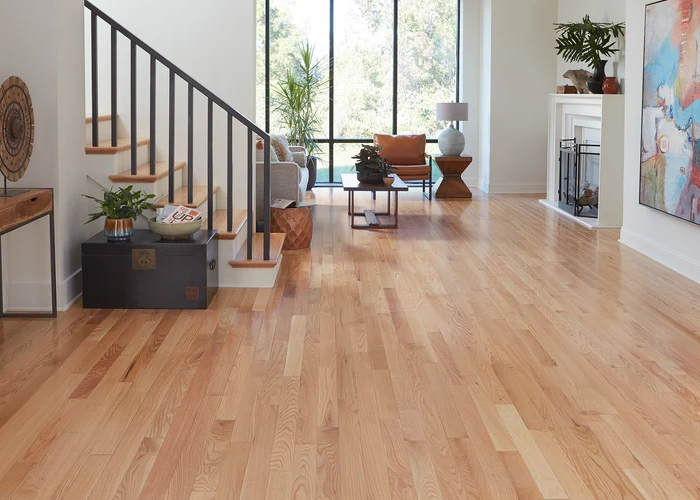
Oak is the best all-around choice for most Raleigh homes. It’s tough enough for daily life and it takes stain well. It’s also easy to find and easy to refinish. Choose engineered oak if your floor sits on a concrete slab or you want less seasonal movement. Choose solid oak for upper floors and crawl space homes where you plan to sand and refinish for decades. Hickory suits busy houses with dogs and kids. Maple suits a clean and modern look. Raleigh summers are muggy and winters run dry indoors. That moisture swing matters more than the species you pick. Here’s how to match the wood to your house before you start comparing hardwood flooring Raleigh NC options.
Key Takeaways
- Pick engineered planks for concrete slabs and basements. Pick solid for upper floors and wood subfloors.
- Choose oak for balance. Choose hickory if pets and kids will test the floor every day.
- Keep indoor humidity between 30 and 50 percent all year.
- Check the wear layer on engineered planks. Thin ones can’t be refinished.
- Put samples on the floor in the actual room before you buy.
Which Hardwood Flooring Types Are Best for Raleigh Homes?
Oak in solid or engineered form fits most homes. The rest depends on your subfloor and your habits.
Solid Hardwood Flooring
Solid planks are cut from a single piece of wood and are usually about three-quarters of an inch thick. You can sand and refinish them several times. Many floors last 50 years or more with care.
The downside is movement. Solid wood swells in humid weather and shrinks in dry weather. In Raleigh, that can mean small gaps in January and cupping after a wet July. Solid planks are nailed to a wood subfloor. They don’t belong on a slab or below grade. They fit upstairs rooms and main floors over a crawl space.
Engineered Hardwood Flooring
Engineered planks have a real hardwood top layer glued over a plywood core. The layers fight each other’s movement so the board stays flatter. That makes engineered wood the safer pick for humid summers.
It also installs over concrete. You can glue it down or float it. The key number is the wear layer. A layer of about 2 millimeters or more can be sanded once or twice. A paper-thin layer can’t be sanded at all. Ask for the wear layer thickness in writing.
Oak Hardwood Flooring
Oak is the most common hardwood in American homes for good reason. Red oak has warm pink and orange tones and rates about 1290 on the Janka hardness scale. White oak rates about 1360 and has a calmer neutral tone. White oak also resists moisture a little better. That helps in kitchens and entryways.
Oak stains evenly. It comes in wide and narrow planks. It’s easy to repair and easy to match years later. If you can’t decide, go with oak.
Hickory Hardwood Flooring
Hickory is among the hardest domestic woods at about 1820 on the Janka scale. The grain is bold and the color swings from pale blond to deep brown in one board. That busy look hides dents and scratches very well.
Hickory moves more with humidity than oak does. Acclimate it carefully and keep your indoor air steady. Engineered hickory is often the smarter choice in this climate. The look is rustic. Some people love it and some find it loud.
Maple Hardwood Flooring
Hard maple rates about 1450 on the Janka scale. The grain is tight and the color is pale and creamy. It gives a smooth modern look that suits light and airy rooms.
Maple can turn blotchy when stained. Natural and light finishes show it at its best. It’s also less forgiving of dirt and dark scuffs on a pale surface. Plan on regular sweeping.
What Should Raleigh Homeowners Consider Before Choosing Hardwood Floors?
Four things shape the decision. Humidity comes first. Then subfloor and use. Budget comes last.
Indoor Humidity and Seasonal Changes
Raleigh has a humid subtropical climate. Summer air is thick and winter heating dries the house out. Wood absorbs and releases that moisture all year. A floor that fits tight in August may open gaps by February.
A few habits help:
- Run a dehumidifier or your air conditioner in summer
- Add a whole-house or room humidifier in winter
- Keep a cheap hygrometer in the room and aim for 30 to 50 percent
- Let new planks acclimate in the house as the manufacturer directs
Steady humidity does more for your floor than any finish. If you track the number the wood will reward you with fewer gaps and less cupping.
Room Location and Subfloor Type
Check what’s under the floor. A concrete slab calls for engineered wood. Test the slab for moisture first. Homes over a crawl space can take solid or engineered. Make sure the crawl space has a vapor barrier and good ventilation. A damp crawl space sends moisture straight up into the planks.
Basements and other below-grade rooms should get engineered wood only. Many installers won’t warranty solid wood there. Ask before you sign.
Foot Traffic, Pets, and Scratch Resistance
Hardness helps but finish matters just as much. A matte or wire-brushed surface hides scratches far better than a high gloss. Pale and mixed-grain woods hide marks better than dark and smooth ones.
Dog nails are the main scratch source. Keep them trimmed. Put felt pads under furniture and use mats at the door. Grit tracked in from the yard wears a finish faster than any pet does.
Budget and Long-Term Maintenance
Prices swing with species and plank width and the installer. As a rough guide oak materials often run around $4 to $9 per square foot. Installed totals commonly land between $8 and $16. Hickory and wide planks cost more. Get quotes for your own rooms.
Upkeep is simple. Sweep often. Damp mop with a wood-safe cleaner. Skip steam mops. A screen and recoat every few years refreshes the finish without a full sanding. That’s far cheaper than replacing the floor.
Which Hardwood Flooring Is Best for Different Rooms?
Match the wood to the room’s moisture and traffic. A bedroom and a back door ask very different things.
Hardwood Flooring for Living Rooms and Bedrooms
Almost any hardwood works here. These rooms see lighter traffic and steadier humidity. Solid oak is a great fit over a crawl space. Maple gives a bright look in a bedroom. Wider planks make a room feel larger. Think about your rugs too. Furniture and sunlight will change the color over time so move the rugs now and then.
Hardwood Flooring for Kitchens and Entryways
Kitchens and entries get water and grit. Choose engineered oak or white oak with a strong factory finish. Wipe spills fast. Watch the spots under the dishwasher and the sink and the fridge water line because slow leaks ruin planks.
Entryways need a good mat inside and out. A boot tray helps in wet weather. Skip a high-gloss finish at the door because it shows every scratch.
Hardwood Flooring for Homes With Pets and Children
Hickory is the toughest choice here. White oak with a wire-brushed matte finish is a strong second. Both hide wear well. Engineered versions handle humidity changes without fuss.
Expect a few marks anyway. Wood develops character. Pick a finish that makes those marks look natural. Then relax and let the kids play.
Conclusion
Start with your subfloor and your humidity. A slab points to engineered wood. A crawl space opens both options. Then choose the species by lifestyle. Oak suits most families. Hickory handles pets and kids. Maple gives a clean light look. Whatever you pick, keep indoor humidity steady and ask about the wear layer on engineered planks. Set the samples in your room and look at them morning and evening. When you’re ready to compare samples and quotes for hardwood flooring in Raleigh NC, bring your humidity readings and your room list.
Read More: Read More: What Type of Flooring Works Best for Raleigh Homes With Busy Households