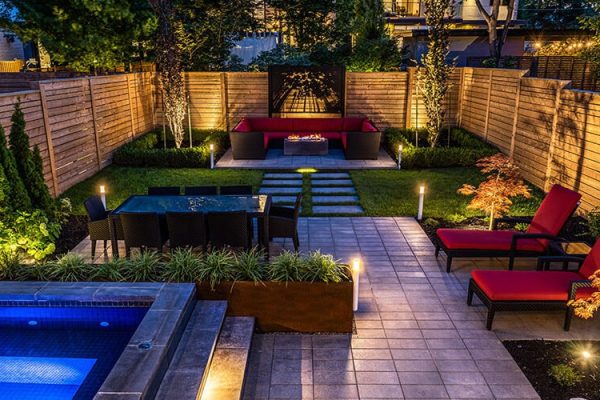
Lighting is the cheapest transformative change available in a home and the one most consistently neglected. A great many British rooms are lit by a single central pendant with a cool white bulb, which flattens the space, casts shadow into the corners and makes everything in the room look worse than it is.
Fixing it rarely requires rewiring. Most of the improvement comes from adding lamps and changing bulbs.
Three Layers, Always
The principle behind every well-lit room is layering. A single source cannot do three different jobs.
| Layer | Job | Typical fittings |
|---|---|---|
| Ambient | General background light for moving around | Pendant, ceiling fitting, wall washers |
| Task | Light directed where you do something | Reading lamp, undercabinet strip, desk lamp, mirror light |
| Accent | Depth, interest and atmosphere | Uplighter, picture light, shelf lighting, candles |
The practical target for a living room is three to five light sources at different heights, switched separately. That single change does more than any redecoration.
Understanding the Numbers on the Box
Bulb packaging has become confusing, and two figures matter more than the rest.
- Colour temperature, in kelvin. Lower is warmer. Around 2700K is warm white and suits living rooms and bedrooms. Around 3000K is slightly crisper and works in kitchens and bathrooms. 4000K and above reads clinical in a home and is rarely appropriate outside a utility space or workshop.
- Lumens, not watts. Lumens measure light output. Watts now only tell you energy consumption, which is why comparing LED bulbs by wattage is meaningless.
- Colour rendering index. Higher is better for showing colours accurately; look for CRI 90 or above where it matters, such as a kitchen, a bathroom mirror or anywhere you get dressed.
- Dimmable, which not all LEDs are. Check compatibility with your dimmer switch, as mismatches cause flicker and buzzing.
- Beam angle for spotlights, which determines whether you get a pool or a wash.
Keep colour temperature consistent within a room. Mixing 2700K and 4000K bulbs in one space is the most common and most visible lighting error in British homes.
Room by Room
- Living room. Dim ambient, two or three lamps at different heights, something warm. Avoid relying on downlights, which create a lunar effect in the evening.
- Kitchen. Undercabinet task lighting is essential; working in your own shadow is the standard complaint and this fixes it. Add a pendant over an island or table.
- Bedroom. Bedside lights on both sides with individual switching, warm bulbs, and a dimmer if possible.
- Bathroom. Light beside or around a mirror rather than only above it, which casts shadow down the face. Fittings must meet the required rating for the zone.
- Hallway. Two sources rather than one, because a single central light leaves both ends dark.
- Home office. A task lamp positioned to avoid screen reflection, and cooler light during working hours if the room allows.
- Stairs. Even light with no glare, and switches at top and bottom. This is a safety matter as much as a design one.
Bathroom and Outdoor Fittings
These two locations have genuine regulatory requirements rather than preferences.
Bathroom lighting is governed by zoning rules based on proximity to water, and fittings must carry an appropriate ingress protection rating for the zone they occupy. Outdoor lighting requires fittings rated for external use with appropriate protection. In both cases, installation of new circuits or fittings should be carried out by a registered competent electrician who can certify the work. Some electrical work is notifiable, and certification matters when you sell.
Smart Lighting, Realistically
Smart bulbs and switches are genuinely useful for dimming without rewiring, for scheduling, and for controlling lights in awkward positions. They are less useful when they become the only way to turn a light on and the app fails.
Practical approach: choose a system where physical switches still work, check whether it needs a hub, and be aware that smart bulbs behind a wall dimmer generally conflict. If you rent, smart bulbs are the easiest lighting upgrade available because they require no alteration at all.
Quick Wins That Cost Little
- Replace every cool white bulb in a living space with 2700K warm white
- Add two floor or table lamps to a room lit only from the ceiling
- Fit undercabinet lighting in the kitchen, which is available as plug-in strips
- Put a dimmer on the main living room light
- Add a bedside light on the second side of the bed
- Uplight a plant or a corner to add depth
- Use a lower-wattage bulb in a hallway fitting that currently dazzles
UK Housing Stock and Local Considerations
In the North West, housing and property coverage appears in the Manchester Chronicle and Liverpool Tribune, both with extensive Victorian terraced stock. Yorkshire housing is followed by Leeds Angle, Sheffield Voice and Bradford Daily.
Scotland, where tenement flats and a separate building standards and warrant system apply, is covered by Glasgow Bulletin and Edinburgh Scope. Northern Ireland, with its own regulations, is reported by the Belfast Record.
Midlands housing, trades and retail appear in Birmingham Focus, Coventry Insight, Leicester Echo, Derby Digest and Nottingham Times. The Newcastle Brief and Hull Report cover the North East and Humber.
Southern and coastal housing, with its own damp and exposure considerations, is covered by Brighton Update, Southampton Ledger, Plymouth Wire and Bristol Outlook. London flats and conversions are reported by London Signals and Capital Outlook. Housing and energy support policy is followed via DWP UK Latest News, with construction and property trade reporting in Trade Mirror.
Frequently Asked Questions
What colour temperature should I use?
Around 2700K for living rooms and bedrooms, up to 3000K for kitchens and bathrooms. Keep it consistent within each room.
Why do my LED bulbs flicker on a dimmer?
Usually incompatibility between the bulb and the dimmer. Check the bulb is dimmable and that the dimmer is rated for LED loads, which older dimmers often are not.
Are downlights a bad idea?
Not inherently, and relying on them alone produces harsh downward light. Use them as one layer alongside lamps, and be aware they can affect ceiling insulation and fire performance, which is a matter for a qualified electrician.
What is the cheapest way to improve a room?
Two lamps and warm bulbs. It costs very little and changes how a room feels more than paint does.
Further Reading
Property, retail and lifestyle reporting appears across News Notes, Local News Point, Weekly Journal and Trends Archive. Retailers, makers and trades seeking coverage use agencies listed via Local PR Services, PR Directory and Press Hubs.
The Bottom Line
Layer it: ambient, task and accent, with three to five sources at different heights in a living room, switched separately.
Use 2700K warm white in living spaces and keep the temperature consistent within each room. Compare bulbs by lumens rather than watts. Fit undercabinet lighting in the kitchen and a light beside the bathroom mirror. And use a registered electrician for bathroom and outdoor work, where the rules are real.
This article offers general design and practical guidance for a UK readership. It is not construction, electrical, structural, fire safety or legal advice. Building regulations, planning rules and permitted development rights differ between England, Wales, Scotland and Northern Ireland and change over time. Electrical, gas, structural, drainage and fire safety work must be carried out by appropriately qualified and registered trades, and certain work requires notification, certification or consent. If you rent or hold a leasehold property, check your agreement or lease before making alterations. Confirm requirements with your local authority building control and a qualified professional before starting work.